Bootler"s Yearly Random (But Interesting) Fact

7-Up was origanally named Bib-Label Lithiated Lemon-Lime Soda.
Showing posts with label Interview. Show all posts

Thursday, October 30, 2008

Golden Bortons 2008 -- Interview #4: Dennis Zöllner


An interview with Dennis Zöllner, a.k.a. mr. limes, co-creator of No. 2.

Click here to see the film!


KS: What made you interested in filmmaking?

DZ: I think it has to do with the idea of enhancing the way to tell a story in a way no prose work or stage play can. I mean, it's there where the cultural heritages lie, but I feel somehow with moving pictures you can go far beyond - it's rather like a kind of amalgamating all other forms of art if done in the right way.
I always had a strong need to find ways of telling stories- so sooner or later I had to end up shooting film I guess.


KS: What were some of your earliest experiments in filmmaking?

DZ: Oh, terrible stuff. Very clumsy animations and a pretty trashy Sci-Fi parody. But it was incredible fun shooting it- just playing along with the medium and having fun. I've learned a lot during that project.


KS: Where did the idea for No. 2 come from?

DZ: Actually it was an improv exercise we had to do at film school. The task was to produce a short from scratch to post in 1 day. As to explore the effects of sound and picture only, we were limited to use only five words in it.
The idea itself came as my fellow student Jane and me sat thinking hard at the cemetery across the street of our institute building. The first thing that was clear pretty quickly was, that we wanted to do the whole thing completely silent and in the style of the old Expressionist movies we like. Then, there is that labyrinthine cavernous cellar underneath our institute building and I wanted to use that setup, it seemed appropriate. The only way to show its full vista was if we had someone walking through it, so we had a loose direction. I don't know anymore who threw in the idea of that jack-in-the-box, but from then we knew what we were heading to.
By the way, the submitted version is not the original, it was much shorter and we never felt it worked in the right way. A few weeks ago we decided to upheave the whole project and when I came across the call for contributions we decided to submit it if we made it to finish in time. Well, we did.


KS: Certainly, there is a lot of influence from German Expressionism, as you stated. What films in particular did you seek to emulate, if any?

DZ: Well, the beginning is a reference to Das Cabinet des Dr. Caligari, you know there is that close up when Cesare wakes up at Caligari's tent on the fair- that's what we had in mind when shooting the opening scene. The design of the boxes is another thing that is a slight reference to the whole production design of "Caligari", with all its irregular angles and distorted edges. Coming tho think of it, the whole somnambulist thing of "Caligari" is a kind of sub- level of it , as one doesn't know if the man is dreaming or not - so it's pretty much Caligari in it.
On the other hand we have a very angular and clear cadrage - given through the location's architecture - you might find some references to "Metropolis" in its geometric look. Although that great hall with its pillars and wooden pilasters miight remind one a bit on the wood in Lang's first "Nibelungen" part. But that's things the location gave us and if they are references at all, they are more subconscious. The main influence certainly is "Caligari".


KS: One of my favorite aspects of the piece is the location. It has a very rich textural quality to it, but did you have any difficulty shooting there?

DZ: Heehee, yes. As I said it's a huge cellar areal underneath our institute building and is partly in danger to collapse. So we had to ask a special permisson of our rector for getting down there. Plus we had to promis not to go to these parts of it. But they were the most interesting by far. In fact, the room in the final scene and that passage that looks like an old mine are in that area ...
Although it was damn wet down there. Actually there are even some kind of stalagmites- and -tites. And it's just a cellar! But that obviously was good for the atmosphere of the film.

KS: Aside from German Expressionism, what else, film and otherwise, are you typically influenced by?

DZ: Oh, on the visual side certainly a lot by Gilliam and of course Burton, but I also am stunned by the perfection of Kubrick's mise-en-cadre
compositions and as for story telling I am a great fan of Takeshi Kitano's editing method. But that had no impact on "No.2" I guess.
As speaking for my fellow student Jane- who has an equal share on this project - I think I can say that her influence very clearly lies at Burton and Gilliam too. That's why we can work together that good I guess.


KS: How important is it to you to emulate previous works?

DZ: Well, doing "No.2" was fun, but usually it's not that I am thinking so much about emulating some other works. At least not directly, it's more about influences I think. I mean the whole prodcuction process of"No.2" is more like a stream of consciousness -thing insofar that we just remembered the moody vault and wanted to do something in there and as the task was also to use merely any word, or thoughts went down that path to silent movies. But it's not always that way, in general it's more the story choosing itself the right style during the forging process . But certainly our influences always have some impact in one way or another. I guess that's pretty normal. You just have to look out to maintain your own style - too much references can make you stumble a bit I guess...

KS: Do you have any future projects in mind?

DZ: Oh yes. There's a handful of treatments we came up with in the last, I guess, three years that still wait to be shot. Then there's also the script for a feature length project we're writing and hope to get our stuff ready for next years' submission deadlines of several film funding commissions to (hopefully) get it up.
And right now we're also in production with another short that will you change your look on umbrellas for ever. At least we hope ....


KS: What sort of advice would you give to fellow aspiring filmmakers?

DZ: Hm, I guess it's about decisions. Do you wanna make easy money or do you just love the medium. If it is the first, well then- just always stick to Aristotle and never forget to put in the lawyer that rapes that pregnant single mother, that will boost the box office for certain. But if it is the love of the medium- there is a poem the great Leonard Cohen once wrote about writing poetry, it goes something like that: "I am sitting here, writing poems, in the midst of night- for the ones like me, to be read in nights like this." I think it's the same with film. Just do the kind of movies you yourself want to see.


Wednesday, October 29, 2008

Golden Bortons 2008 -- Interview #3: John Erik Taylor


John Erik Taylor, a.k.a. nobody, talks about his animated short, Jungle Swing.

You can watch the musical animated film in this link!


KS: What made you interested in filmmaking?


JET: An active imagination I guess, I'm always coming up with plots. It's the form they take, how i imagine them. I've thought of writing books before and still plan to. But really i'm more into movies then reading.


KS: What were some of your earliest experiments in filmmaking?


JET: GCSE art class, which i guess is around when i was 16. I believe we had to each do a short animation. I think everyone did a stop motion piece except me, i did a 10 second hand drawn piece called 'The Tower', its incomplete i forget how it was meant to end. (it should be on my website). after that i remember lots of brief stop action animations using a digital camcorder i got one Christmas. And when i got the camcorder i remember just filming anything, non of it came of any use. I still have the tapes somewhere...


KS: What's the origin of "Jungle Swing"?


JET: Anton proposed we that make films for 'Ape Week' and so i decided to do a tribute to the great apes of cinema. at one point i even thought of doing a montage of ape b-movies. I went on to look for music and went to my Cab Calloway tracks first, when i heard Jungle Swing the idea just hit me to animate the story being told (even in just the literal sense) and I manage to keep my original idea in there as well.


KS: How did you film and edit "Jungle Swing"?


JET: Everything is drawn on standard printer paper, in pencil and ink. Then I scanned everything a drew and edited on Final Cut Pro. And I think I done some basic editing on Photoshop as well.


KS: Other than the Cab Calloway music, what were some influences on the "Jungle Swing" (both film and otherwise)?


JET: I guess the way it was laid out, it was constructed not too unlike a childrens book, although this was more due to time constraints. As for my general drawn style, and this goes all my animations, it would be early animations of the 20s and 30s. Simply because it was so basic and crude and thats the sort level I'm on.


KS: You mentioned how pretty much everyone else in that class did stop-motion, whereas you did hand-drawn animation. Why do you think you gravitated toward that style of animation instead? Do you generally prefer 2D and hand-drawn?


JET: I'm a drawer by heart and most of the animation i grew up with and loved has been cel animation. It's like choosing between painting and sculpting. With the art class i think we were all expected to do stop-motion as this was to be done by camera, i decided my preference and did it my way. The same happened in University. We were meant to do an animation on 16mm, most people went for stop motion, but a small few of us decided to do 2d, which required the use of a rostrum, a device for actually doing proper cel animation, with the camera practically on the ceiling pointing down. I did cut outs rather then drawing that time, It was interesting using the rostrum.


KS: You mentioned how time constraints made it so that the animation was more simple. But if you had more time, would you have made the animation more full and fluid, or do you think the limited, simple illustrations were enough for this piece?


JET: There was a lot plain still i used, with more time i may done more to that. However the entire itself was all down to a time constraint so it could of been something entirely different. As for being more fluid, i don't know. That's a bit more difficult. There's still some charm in there.


KS: Do you have any more plans to work with 2D animation? What other projects do you have in mind for the future in general?


JET: I certainly do plan to continue animating, maybe i'll do another some perhaps? Other than that I'm still trying to write a feature. Live action. It's been a while since i was actually writing. In the meantime i'm just trying absorb as much as i can, watch as much new, interesting films as i can and get reading.


KS: Do you have any advice or suggestions for a fellow aspiring filmmaker?


JET: Plenty, get a camera, please record and you're a filmmaker. simple as that. Just keep trying new things and always stay original, to yourself and otherwise.

Monday, October 27, 2008

Golden Bortons 2008 -- Interview #2: Autumn McPherson


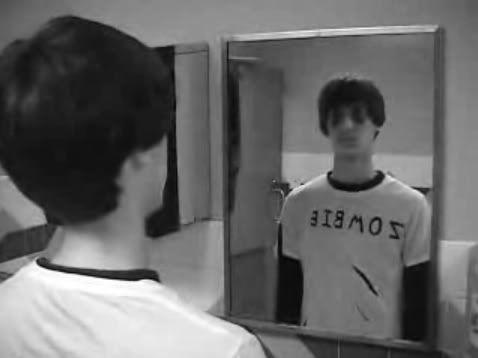
Our second Golden Bortons interview: Autumn McPherson, better known as Stumbleine, on Zombie Girls Don't Cry.

Click here to watch the movie!


KS: What was the origin of the idea of this project?

AM: My fellow classmates and I were all set to film a cheesey 1960's style black and white sci-fi thriller called "Zombie Lawyers from Outer space", for the BAR association contest when they all bailed out on me because they didn't want to put in the time and effort it would take. I had my heart set on doing a zombie flick, but now since our project would literally take one day, I decided to do my own film and thats when I started brain storming with Anton Phibes, sending him ideas for quirky scenes which he would quickly deliver back to me eliquently put in script format.


KS: What were some of your earliest efforts in filmmaking?

AM: My earliest memories behind a camera was when I was five or so. My dad who I barely know now let me use his camera at a play place restaraunt and I filmed my feet going down slides over and over. Then in highschool I stole my parents camera and pretty much filmed my entire highschool experience, until I got sick of school and dropped out to become homeschooled. I messed around with stop motion a little, made silly films with friends about drugging drag queens and avant garde music videos for french pop songs.


KS: What made you want to make movies?

AM: The Labyrinth, I wanted to make a world where I too could put David Bowie in reveling tights and big hair. Although originally I was planning on just being strictly a music video director, I wanted to make the smashing pumpkin videos, I think thats when I made my mind up that I wanted to direct was when I watched the making of their music videos. The video "Tonight Tonight" was beautiful and I wanted to create something that beautiful that was my own. That was the key thing that motivated me to go to film school.


KS: What were some of your influences (film and otherwise) for Zombie Girls Don't Cry? What about your filmography in general?

AM: A big influence for Zombie Girls Don't Cry is the movie Harold and Maude, I borrow that almost 70's style of dark comedy for this piece. Also the works of Wes Anderson inspired me. I believe his and Woody Allen's works have inspired my general filmography, that and old time comedies, like those the Marx brothers and Charlie Chaplin created.


KS: Zombie Girls Don't Cry is a very subtle, brief piece, a very delicate little story. When did you feel that you had given just enough of your message in its brief duration, and with generally subtle nuances? And what is that message/idea behind it, if any?

AM: Zombie
girls was actually intended to be about a half an hour long. The project was abandoned after big complications. The story had continued to the two falling in love through a quirky trick or treat scene (which was actually filmed but has not been view by anyone but myself), a run in with a barber shop, and other cute dark comedy moments added in. But when she brings the zombie boy home to meet the parents things don't go as planned. She's forbidden from seeing him (a bit of zombie prejudice happening) and ends up crying alone in her room (You see, she crys a lot in the movie!) and then runs away to the cemetery to be with the zombie boy, her dad comes after her, afraid that he's lost her, and in fact he has, shes allowed zombie boy to turn her into a zombie as well, and therefore she has no reason to cry anymore.

This story actually came true in my very own life shortly after. Not with a zombie boy of course, and my parents didn't get in the picture, but I was left for another woman and ended up alone and just as misrebel as Sophia, and soon there after was saved and fell in love with a wonderful quircky character myself. It's funny how a story I created was projected so ironically into my real life. I really wouldn't change it for the world.


KS: Make-up effects are often pivotal in your work. Do you find some reason on why you gravitate to that sort of visual expression in film?

AM: It was a big necisity for me to have effects in the film, you cant have a zombie without some make up. Unless you happen to know a real zombie, sadly, i've yet to meet one myself. I did the make up myself, fully stocked up after halloween for the sales, I actually, a year afterwards, am still pleantiful in zombie makeup.


KS: At first glance, the use of such soft folk music with the zombie theme would seem like a striking juxtaposition. How did you feel these two elements would fit well together?

AM: I loved the idea of putting the folk music with the film, probably again a big influence from the use of Cat Steven's music in "Harold and Maude". I had first envisioned the film while listening to Simon and Garfunkle. I knew I couldn't use their music if I wanted to do anything with the film. So I remembered a local folk musician called spitzerspace telepscope. I wrote him and asked if I could use his music (which seemed to fit perfectly with ever scene I had in mind, if you really listen to the lyrics, you'll get it.) and he said yes and sent me a free cd.


KS: Do you have any future projects in mind?

AM: A film called "Lustre" I've been saying i'm going to do for about a half a year now. Maybe in november i'll have time to do it, but I still would have a lot of work to do to get to the point of filming it. It's a short about a knife thrower and his assistant's first show.


KS: What sort of advice would you give fellow aspiring filmmakers?

AM: Make friends that you can rely on in the film world, always be there to hold their boom mic or be script supervisor on their films and they will be for you. I would have never been able to make what I did of Zombie Girls if I didn't have amazing friends who stood out in the cold all day without any complaints.

Sunday, October 26, 2008

Golden Bortons 2008 -- Interview #1: Matthew McGinnis


To kick off this year's Golden Bortons -- The Tim Burton Collective's annual Halloween film festival -- Fuzzy Duck (Kevin Schreck) presents an interview with Matt McGinnis, a.k.a. mongoose_mania. Matt discusses his entry into this year's festivities, Zombie High, which he produced and co-wrote.

Click Zombie High to watch the movie!


Kevin Schreck: What was the origin of the idea of this project?

Matt McGinnis: The love of zombies, really. My church has this annual movie festival where we get to make short films and enter them, and my friend Jon and I wanted to make a zombie movie for it that would be appropriate and was able to be shown. We decided we can't show any gore or blood obviously, which was fine because we wanted to make something fun. But what could we do with zombies that would be fun? Well, those old instructional videos from the 1950s came into question and that's when we finally started fleshing everything out.


KS: What were some of your earliest efforts in filmmaking?

MM: My earliest efforts, actually, were only three years ago, I remember perfectly. For the same film contest, a group of my friends and I got together and made some really poorly made cereal commercials for the most horrible cereals imaginable. We didn't even have an editing program at the time so everything had to be done in one take on an old video-cassette camera. We thought they were the funniest things back when we first made them, but we look at them now and kinda shake our heads. It's funny, when you're younger you think whatever it is you're doing is the coolest thing ever but then as time goes on you notice things that you wished you could do better at or wished you wouldn't have said or something. It's weird.


KS: What made you want to make movies?

MM: I'm one of those kids that was raised on movies. Every day I'd watch a movie and was always so fascinated with them. But what really got me into the art of film was Tim Burton. Like so many people on the Collective, his films were almost therapeutic to me and he made films with characters I could relate to. As I started growing up I wanted to be a writer, but I've always had a hard time putting things into words and have always been a pretty visual person. So I thought to myself, "Well, Tim Burton can tell stories visually, I could try that!" It was almost like a Nightmare Before Christmas sort of thing, where Jack realizes he could try his hand at Christmas. But from that point on, I've really been devoted to working in film and hope to have a career in it.


KS: What are some of your influences (film and otherwise) for "Zombie High"? And for your work in general?

MM: The main influence for "Zombie High" was, as stated before, those old instructional videos from the '50s. They'd usually be about personal hygiene or something, and I love the idea of twisting that to fit around zombies.
Influences for film in general, well, it's mostly just old films from the '30s onward. Those are the some of the best movies, right there. My biggest influences (other than Burton) would have to be Alfred Hitchcock and Christopher Nolan. Two guys who really knew what they're doing when they make a movie, and make everything real and believable, which is something I like to do sometimes.


KS: Was the Glammy award part of the church movie festival?

MM: Yeah, my church has the Glammies every Christmas season. They've been doing it for a couple years now and I've been involved with three so far. This year will be my last year, so I'm hoping to make it a memorable one.


KS: How did you make the effect when the water shot of out his neck?

MM: Ha, this took forever. We had a long tube attached to a plastic pouch full of water, so whenever you'd squeeze the pouch, the water would squirt up. What we did was put the tube in the actors shirt and have someone under him squeeze the tube, and Jon (the director) would fix the angle so that you couldn't see the straw. Old fashioned, I guess, but it looks pretty good to me!


KS: Had you worked with any of the actors in "Zombie High" before?

MM: Yeah, I've worked with the majority of them before. Two of the zombies and I used to be in the same drama class and we'd also do the after school productions as well. I've also worked with Jon before, and he's great to work with, because he always has ideas. All of the people involved with this movie were our friends (except for that army man, I don't have any idea who he is), and it's great working with them because you know what they can do and you can feel comfortable with them.


KS: Do you have any future projects in mind?

MM: I have a few things in mind. They include typewriters, science, ghosts, ginger root, stairs, isolation, children, pens, lab coats, and the 1800s.


KS: What sort of advice would you give to fellow aspiring filmmakers?


MM: I'm horrible with advice, but the only I can give is the obvious: Be yourself. Everyone has influences, everyone has some sort of inspiration, but you don't want to steal from that source or rip it off. The best thing to do is to develop your own style; go outside with a camera and make something short with your friends, just so you can get the hang of it. Never forget that what you're working on came from your mind, and you want to show that on camera. That's the best advice I can give.


KS: I think that's excellent advice. Thank you very much, Matt!

MM: You're quite welcome!

----

More interviews to come throughout this week celebrating the Golden Bortons 2008! Stay tuned!

Tuesday, September 16, 2008

Post-Burtonfest '08: Lolburton Contest Interview

It's not everyday that a critically acclaimed director is born, but just this past August the Burtonites of the Tim Burton Collective decided to let the world know that one had indeed been born, 50 years ago. August 25th was not just our dear beloved Tim Burton's birthday, but the beginning of a celebration based off of Burton's creations.
Burtonites gathered together to collectively watch Burton's films in the order they were released for one week. Members chatted amongst each other, connecting Burtonites from the peaks of Europe and the corners of America. Contests of all sorts were held to entertain Burtonites outside of the avaliable circle of film watchers or just to pique the interest of all of the Collective's varied sorts of artists.
One contest in general, not only lacked drawing or grammar skills, it encouraged users to spell their worst and think their funniest: the Lolburtons. Macros, known to Wikipedia as, "
a term coined for a picture with digitally superimposed text, often for humorous effect." Burtonites were asked to choose a picture somehow related to Tim Burton, whether being a picture of him, a scene from one of his movies or even a major collaborator, and to macro it to their liking. The end result was anything but disappointing, and left tough decisions all around! However, the Lolburton winner has been announce, may I present to you, Corky Buttermilk!


Photobucket
A Burtonite is born


Vonni Vice Vivace:
Thank you for doing this interview for winning the Lolburton Contest, Melanie.
Corky Buttermilk: Thank you for interviewing me!


VVV: Would you say that you've always been a naturally funny person?
CB: I wouldn't call myself naturally funny, per se, more naturally goofy. I enjoy ridiculous things. I am a ridiculous person. That doesn't always equal funny, but I like to think that most of the time in my case, it does. Other people have told me I'm funny, I guess I can believe them. I know I can amuse myself and that's half the battle!

Photobucket
The winning submission

VVV: Is it common for you to recognize an unintentionally possibly hilarious scene while you watch movies and look at pictures? What sorts of films bring this urge to macro on?
CB: Oh yes, all the time. Especially when I'm watching movies that I've already seen and have to pause them for whatever reason. It's at those times you really notice a completely new way of looking at a scene that you've watched a few times before. Pausing can cause a completely non-funny scene to take on hilarious properties. I also enjoy watching completely serious, dramatic movies and seeing the absurd in them. This helps a lot with finding things to macro. A lot of times, the more serious movies or scenes make the funniest macros because you're looking at something that wasn't supposed to be funny at all and seeing really just how funny it actually is. Take my Pee-wee macro for example. It's a very serious scene where Pee-wee is rescuing animals from a pet store that's on fire. And as we all know, fire can be serious business! There's a point where he gets the dogs to safety out on the sidewalk and he's telling them to stay and raises his hands up. One day I was re-watching it yet again and I knew then that it was my destiny to make him fondle invisible boobs when he does that. And boom! There's a macro! And it's from a very dramatic, suspenseful scene that wouldn't ordinarily make people think of boobs, invisible or otherwise! I love that sort of juxtaposition between the drama and the humor.


Photobucket
The second submission from Corky Buttermilk

VVV: You won for your Pee-Wee's Big Adventure macro entry, what sort of role does Burton's film hold in your life?
CB: I certainly wouldn't be the person I am today without Burton's films, that's for sure. Especially the films of his that came out when I was growing up and in those formative years. I love the off-beat sense of humor his films have. They've shaped my own sense of humor. In a way, I guess I kind of owe a huge part of my sense of humor to Pee-wee's Big Adventure. I adored all things Pee-wee when I was growing up and Pee-wee's Big Adventure is still my all-time favorite movie.


VVV: If you (or anyone for that matter) can possible do so, could you list your favorite Tim Burton films from starting from your personal favorites?
CB: Ok, from favorite to least favorite:
Pee-wee's Big Adventure
Edward Scissorhands
The Nightmare Before Christmas
Beetlejuice
Mars Attacks!
Ed Wood
Sweeney Todd
Big Fish
Sleepy Hollow
Batman Returns
Batman
Corpse Bride
Planet of the Apes
Charlie and the Chocolate Factory

Photobucket
Corky as she appears today, still a great follower of Burton

VVV: What were your favorite festivities that took place during Burtonfest '08 and why were they your favorite?
CB: I love the art contest. I love seeing what everyone comes up with. I'm a very visual person. And I loved the LOLBurton contest but I wish there had been even more entries! I love those things! I also enjoyed the group movie watching/chats. Those were really fun.


VVV: Is there anything you hope that Burtonfest '09 will include that this year's festival didn't?
CB: A meetup would be nice. Or something like a BurtonCon! I really hope someday we can have a physical realization of Burtonfest somewhere.


~~Vonni

Sunday, October 14, 2007

Halloween Costume Contest!

The details for TBC Halloweenfest's Halloween Costume Contest are now up at our forum: http://www.timburtoncollective.com/phpbb2/viewtopic.php?t=6887

Last year the contest was a smashing success, and there were many interesting entries. Here are some of the best ones:


Pictured from top to bottom: sands*, Fuzzy Duck, Ev1l_H0PsC0TcH.

Our Halloween Costume Contest host, sands*, graciously answered a few interview questions for the Burtonite Blog.

Burtonites Blog: sands*, how does it feel to host the costume contest again?

sands*: Awesome. Its the second time I do it. But I do feel a bit embarrassed for winning last year when I was hosting.

BB: You seem to be a costume person, what about Halloween costumes fascinates you so?

sands: You get to be someone different for a day. That's always fun. Life is boring sometimes. Its the only day in the year when you can dress up and no one will make fun of you. Plus, no one would recognize you either... good time to play some pranks.

BB: You think we will have a lot of shocking surprises in this years contest?

sands: I hope so. Last year there was a good number of people that entered. But my goal this year is to have many more. Also, I believe the prizes are going to be much better.

BB: Any inspirational words for all the aspiring costume contest entrants out there?

sands: Just have fun. We're between friends here. So don't be shy and enter the contest! You wont regret it.

BB: Thank you for your time sands*, we let you back to your Duckman now.

sands: Mmm, Duckman. Thanks, I love the Burtonites Blog!

Wednesday, October 10, 2007

Burtonite Filmmaker Interviews, part III: Kevin Schreck (Fuzzy Duck)

An Interview with Kevin Schreck
By Michael Smith
October 7th, 2007

Kevin Schreck (a.k.a, Fuzzy Duck, on the Tim Burton Collective) has been a filmmaker for years. His stop-motion animated satire, An Interview with Death, was a Golden Borton Award Winner in 2006. In this interview, the filmmaker talks about his interest in working on various genres of films, working from documentaries to animation simultaneously, and sometimes accidentally bringing out his own personality in the characters he’s created…

Michael Smith: When did you first start making movies?

Kevin Schreck: When I was ten years old, I felt compelled to try messing around with my dad's camcorder. The first couple of films I made involved two puppets, a mallard duck, named Fuzzy Duck, and a hippopotamus, named Billy Bob. The short movies were about ten minutes in length, each scene shot in sequence (since I didn't have any computer programs for movie editing and since it was an 8 mm camera, I believe), and had some music cues, props, etc. I supplied both characters with their movements and voices from beneath a table. I made about four of these movies, I think, adding new characters along the way and drawing them a lot. When I was 11, I received a computer program called "Lego Studios," which allowed you to make stop-motion or live-action short movies. I tinkered around again with the puppets and with some "Simpsons" action figures and toy dinosaurs and such.

MS: When did you realize filmmaking was the career you wanted to pursue?

KS: I'm not entirely certain when that moment was. I guess it became a conscious realization after making the stop-motion experiments on "Lego Studios." I had tried out a lot of forms of art, like drawing, photography, music, acting, and more. But none really fully captivated me (except for drawing). I guess, subconsciously, I felt that film encompassed all of those forms of art for one big project to tell a story.

MS: What filmmakers do you admire the most?

KS: Tim Burton is the big one for me. I really admire his work because he is able to work in so many different kinds of genres and styles and still leave that unique, personal touch to them. Stanley Kubrick is another one. Again, he really was able to work with various genres and still speak very profoundly and convey his own artistic styles and techniques. Others that I really like are Alfred Hitchcock, Michael Moore, Sergio Leone, and Ed Wood. So a lot of different filmmakers with different styles, who worked with different genres, and came from different eras.

MS: Would you like to work in several genres, like the directors you mentioned? Or is there a certain type of film you'd like to be making?

KS: Working in several different genres appeals to me the most. I'd feel a little confined to just one genre. I mean, there are some directors who really defined and even revolutionized the genres they worked in. But for me, personally, I like embracing an eclectic taste. I think being able to tell stories in different ways, with different atmospheres and issues and such, is very appealing. There's so much to do. Different mediums of filmmaking, too, from live-action narratives to documentaries to animated films.

MS: What's your favorite film that you've made?

KS: Probably An Interview with Death. That was a real labor of love. Almost two years of my life went into making that film, so, in order to complete that project, on practically no budget and with things like school going on, that was a big feat, and I had to be really into it and dedicated to it. Plus, I love the medium of stop-motion animation. It's such an organic, tangible style.

MS: Where did the idea for An Interview with Death come from?

KS: Well, I went to Interlochen Arts Camp when I was fourteen. I went there for musical theater, but my favorite class was my elective, sculpture. It turned out the teacher, Jason Johnston, had worked with stop-motion before, and he said he'd be willing to help me make the armatures I'd need for the puppets for a film, if I wanted to. This was the first time I actually had the opportunity to try out stop-motion and construct my own characters and such, which I had been drawing a lot, and I only had four weeks to do it. Although I had worked with stop-motion before, I was still a novice, so I wanted to avoid more difficult things like walk cycles. Seeing how walk cycles would be tricky, I decided that an interview structure would be best, by having all of the characters sit down, and tell a story.


Kevin Schreck with the cast of An Interview with Death (2006).


MS: An Interview with Death is almost completely character-driven, centering on four eccentric personalities. Were these characters your creations, or was it a collaboration between you and the actors?

KS: I had the general design of the characters for a while. They consisted of Fuzzy Duck, this girl with a beret, a guy in a regular sort of corporate employee look but with a brown paper bag over his head, and the Grim Reaper. So they were really sort of one-dimensional before production began. I showed the actors, Laura, Bill, and Brendan, some sketches and the puppets (which weren't even finished yet), just to give them a vague idea of who they were playing. I had them sit in a chair, let the camera roll for about thirty to forty minutes and had them just improvise their material. I did the same with myself for Fuzzy Duck (though I was going to be the paper-bag guy, John Jackson, before I got Brendan). They came up with some really funny material, but I had to choose only the best, most important material (only about two or three minutes a piece, at most) to use, since the animation would be so laborious and time-consuming. After the movie was finished, there was this weird, circular feeling to how the characters had developed. Even though the actors really brought them to life, I found some traits in myself in the characters. I guess those originate more from the drawings.

MS: Fuzzy Duck seems to appear from time to time throughout your work. Do you plan on reusing any of the other characters?

KS: Possibly. I'd like to come up with some more characters some time. I love the ones I have, but it's good to keep drawing, observing strange, funny things, and sort of personalizing them. I guess Fuzzy Duck comes up the most because I relate to him most. He's this short, odd, kind of angry guy who just seems to vent about a lot of messed-up things in the world. I'm not usually that easily enraged or irritated, but I like those characters that are aware of those little annoyances in the world. It's cathartic to bring your own quirks out with a character. Also, I like ducks; they're my favorite animal. My very first drawing was of a duck, so that's a personal thing for me. Lula (the girl with the beret) is interesting, too. She sort of is a tribute, as well as a parody, of modern liberalism. But it's kind of hard writing for a female character, being male. It's good to work with what you know (even though I'm not a duck).

MS: What led you to make Dear Leader: Mr. Kim?

KS: I had begun the drawings and making the puppets for Interview in the summer of 2004. But then school came along, and I had to focus on my grades and classes. Also, I didn't have the technology for Interview so I had to put it on hiatus. But I still wanted to make a movie. Luckily, I found out that my history class was going to have this big, technological project for the whole second semester. The project would be focused on a contemporary world conflict, and that was all I knew. Making a movie was an option, so I thought it would be the perfect opportunity to be able to make a movie while simultaneously contributing to my classes and schoolwork. So I decided on making a documentary on North Korea, and the dictator of the country, Kim Jong-Il. I started the movie in the fall, reading about a dozen books on the subject. It's such a fascinating situation; it's really the only place left in the world with that sort of communist regime. And Kim Jong-Il is such a weird, mysterious character. He's like some sort of Hollywood super-villain.

MS: I often find it easier to complete a film when it's for a project or a festival (i.e., the Golden Borton Awards) because you have a deadline that spurs you on. Do you feel the same way?

KS: I guess so. I think having a certain amount of pressure like a deadline is really motivating, or else you may not finish a project. It can be hectic, but that's part of the process of filmmaking. I had a deadline for Dear Leader: Mr. Kim more than on Interview, which was more of a personal goal of mine. So I've kind of worked with both. I guess I'd have to try it out more to find out what works best for me. It can be a hindrance, too, though, but you learn from your mistakes.


A drawing of Fuzzy Duck meeting his doom for An Interview with Death (2006).


MS: You seem to enjoy animation, from your drawings to your film, An Interview with Death. Do you have any plans for future animated films?

KS: Nothing official as of the moment. I've been messing around a bit with an idea called Fuzzy Duck Goes Hawaiian. I'd like it to be a cel-animated film, kind of like the old shorts from the 1930s and 1940s from Warner Bros. The technology would certainly not be the same, but I'd like to capture that sort of energy to it: the manic energy, the character expressions and movement, the artistry of those films in general. I don't really have a synopsis of the film. I just like the idea of putting my character, Fuzzy Duck, in a setting like Hawaii, with the stereotypical music and such. It's a very different place from anywhere else I've been, so that'd be fun to try out.

MS: Any plans for future projects in general?

KS: Again, nothing official as of now. I wrote a screenplay last year, though. It's not completed, but it's a comedy about these two poor, middle-aged guys who live on the St. Croix River between Minnesota and Wisconsin and enter a local fishing competition for a cash prize. I don't know whether it'd be a feature-length film or a short, but I hope to do it someday. I'd need actors, though. Another idea is a documentary on the issue of creationism/intelligent design vs. evolution. That's a debate that's really interested me. There's this multi-million dollar Creation museum that opened in Kentucky this year. I'd love to check it out...

MS: Any inspirational words for all the other indie filmmakers out there?

KS: Don't be afraid to go out there with just a camera and make something. I know I'm not the only one, or the first one, to say this, but really, if you have creativity, motivation, and a camera, that's really all you need. Don't allow issues like budgets or transportations or actors (or a lack thereof) to stop you from expressing your ideas and making something that you think is important, something that you think would be entertaining, or something that you think would just be a lot of fun to make. The best way to get into filmmaking is simply by making films.

MS: Thanks for your time, Kevin.

KS: No problem, Michael. Thank you very much.

Tuesday, October 9, 2007

Burtonite Filmmaker Interviews, part II: Michael Smith (The Martian Ambassador)

An Interview with Michael Smith
Edited by Kevin Schreck
October 7th, 2007

Michael Smith (a.k.a, The Martian Ambassador, on the Tim Burton Collective) has worked on a variety of films. El Chupacabra, his film from last year, was a Golden Borton Award winner, and he is near completing another new film, entitled Two Left. In this interview, the filmmaker talks about themes he sees in his numerous and very different films, his earliest projects, and how to use an idea in a very low-budget, independent movie…

Kevin Schreck: What made you want to get into filmmaking?

Michael Smith: When I was eleven, my parents bought a DV camcorder, and my older brother and I started making these little movies. Evan, my brother, kinda moved on after a while, but I just kept making them. Eventually I realized it was something I'd like to do for a living.

KS: Were there any particular films and/or filmmakers that inspired you early on?

MS: Well, my first movie that I made all on my own, a stop-animation short done with LEGOs called Dino Island, was basically a parody of the Jurassic Park films with spoofs of scenes from The Lord of the Rings: The Fellowship of the Ring cut in, so I guess Steven Spielberg and Peter Jackson. Even now, I'd like to make the sort of movies they do.

KS: How would you define or describe those movies they do?

MS: I feel like I'm simplifying their work by lumping their films into one category, but action/adventure films. Stuff like the Indiana Jones movies or Jackson's King Kong, movies that are just fun to watch and still push the limits of filmmaking.

KS: You've certainly done a wide range of film genres and styles: El Chupacabra, The Bus, Rasputin: The Death of the Mad Monk, etc. What do you think those films have in common?

MS: It’s weird, because I just said that I'd like to make action/adventure films, but I really haven't done that many, except for maybe The Bus and Wrong Address. Most of my movies start off with something general that I like, like cryptozoology, or dinosaurs, or Grigori Rasputin. Then I try and find a way to work that into a plot I can film. I guess one of the main things they all have in common, though, is that they don't take themselves seriously at all. They're all pretty lighthearted.

KS: Where did you come up with the idea for El Chupacabra?

MS: William Palacio, who co-writes, co-produces, and acts in most of my films, and I were talking one night and decided we needed to make a really bad, corny horror movie, and immediately chose the chupacabra to be the antagonist. However, like the majority of films we talk about making, it got forgotten as other stuff came up. Then, later that year, in Spanish class at school, our teacher told us that we would have to write and act out a short skit in Spanish. William and I recognized this as our chance to use our chupacabra idea and we convinced our teacher to let us make a movie. When we began writing, though, the style was completely different from what we had originally envisioned.

From Left to Right: Gabe Fry, Michael Smith, William Palacio, and Andrew Jefferson on the set of El Chupacabra (2006).


KS: How was it different from your original conception?

MS: We had first imagined it as an over-the-top splatter-fest with a lot of slapstick. But we ended up writing a much more subtle, noir-ish sort of story.

KS: Your most recent film is called Two Left. What's that about?

MS: It's about three friends who go camping and unwillingly release a demon who's been imprisoned for hundreds of years. The demon, a serial killer in his human life, was sent to Hell, but made a deal with the Devil. If he can harvest six hundred and sixty-six souls within half a century, he'll be free to roam the Earth forever, killing as he pleases. When we meet up with him, he already has six hundred and sixty-four souls, leaving only two left, so it's up to the friends to stop him before he can pay his debt.

KS: What was the origin of this concept?

MS: Well, about a month ago, I got a job at a Halloween store. Most of the time in there it's just standing around (though it's getting much busier now as Halloween approaches). So, I'm walking around the store for hours at a time, looking at all the masks and costumes and thinking, "How could I use these in a movie?" I had the basic plot and most of the dialogue in my head by the end of one workday.


Gage Rollo as Mulo in Two Left (2007).


KS: As of this interview, Two Left is still in production. Which of the two would you say was a more challenging film to make, Chupacabra or Two Left?

MS: Right now I feel Two Left is more difficult, but that might change a few months from now when I can look back on both of them. But Gabe Fry and William, who play the two main characters in Two Left, are on the soccer team now, so they practice every day after school until five. That gives us about an hour to film before it gets too dark, so we really don't have time to do anything other than film. If someone flubs a line or trips walking into a scene, we don't even have time to laugh, we have to pull ourselves together immediately and keep going.

KS: Are you still considering to make sequels of El Chupacabra?

MS: That's a tough question. William and I planned out a trilogy after the first film was completed, and I really like the story we came up with. It explained some of the stranger things from the first film and made the chupacraba into a threat to the whole world. However, I don't really see it happening--I've done the chupacabra, I think I'd rather devote my energy to something else.

KS: Are you planning on any future projects?

MS: I had a holiday movie planned and half-written, but that was before I started Two Left, and I don't know if I'll be able to finish them both by Christmas, which is when I'd like to have the holiday movie completed. It's called Getting into the Spirit, and it's about two elves trying to force a Jewish man to celebrate Christmas.

KS: Where did that idea come from?

MS: I'm not sure, actually. A few months ago Gabe, William, and I showed Wrong Address at our old middle school, and they mentioned that we should try and make something for this Christmas assembly they have every year. I guess that's when I started thinking about it, but I don't know where that specific plot came from.

KS: You have certainly kept yourself busy with a lot of films. What would you suggest to aspiring independent filmmakers?

MS: Don't let a lack of resources stop you from making whatever you want. As long as you have a camera and creativity, there's really nothing you can't do. It may not look exactly how you want it, a CGI giant squid might look better than a the cardboard miniature one you made, but it's all practice for the future. Just have fun with it.

KS: Wise words. Thank you very much, Michael.

MS: And thank you.

Monday, October 8, 2007

Burtonite Filmmaker Interviews, part I: J. L. Carrozza (Max Cady)

This is the first of a series of interviews with filmmakers on the Tim Burton Collective. We hope you enjoy these little insights into these talented artists, and look forward to more in the near future!

An Interview with J. L. Carrozza
Edited by Kevin Schreck
October 1st, 2007

J. L. Carrozza (a.k.a, Max Cady, on the Tim Burton Collective) has been making films for years. His film from last year, Little Red Riding Hood, was a big success during last year’s Tim Burton Collective Film Festival, a.k.a, the Golden Borton Awards. Carrozza’s latest film is entitled, Dream House, and will be entered into this year’s Golden Borton Awards, as well. In this interview, the filmmaker talks about the sources of his inspiration, the political allegories in his films, and a few upcoming projects…


Kevin Schreck: First, a rather typical question: What made you interested in filmmaking?

J. L. Carrozza: Well, I was five or six years old and I saw the original Godzilla on VHS, on a six inch TV. I was absolutely captivated by what I saw. I was obsessed with dinosaurs and wanted to be a paleontologist but shortly after I realized I wanted to be a filmmaker and make movies like Ishiro Honda and Eiji Tsuburaya.

KS: What were some of your earliest efforts in filmmaking?

JLC: When I was around nine or ten I grabbed a video camera my family had and started making stop motion movies with Bandai kaiju action figures. I was a big fan of Ray Harryhausen too, you see and yeah, at first I wanted to make movies like his too. My first more serious movie was when I was 14. I got big into violent horror films (much to my parents chagrin) and tried to make a slasher film called Plastic Man about a man possessed by a demonic mask who goes around killing people. However, while I was shooting it I ran down a street chasing a pickup truck. My parents saw it and took my camera away for a year.

KS: So was that project was ever finished?

JLC: Nope. I'd love to find the footage and put it online though.

KS: Horror movies and their influences seem to be a prevalent theme in many of your films. Your latest film, Dream House, involves a haunted house, a prophecy of a rape, and a scene of torture. Why do you think you gravitate to themes like this?

JLC: I'm just a huge horror buff really. I love horror movies that are both beautiful and horrible at the same time, like Matango, Human Lanterns or Mario Bava's movies, to name but a few. That said, I also feel that I make these movies as something of a political statement as well. We live in really violent times and mankind, as whole, has always had a natural inclination toward violent acts.

KS: I'll get back to Dream House in a bit. Your previous film, Little Red Riding Hood, also had a lot of horror themes in it. What made you want to make an adaptation of that story?

JLC: It's always been my favorite Grimm's Fairy Tale and since after I made the awful The Boy Who Cried Wolf I've wanted to make Little Red Riding Hood. My original vision of it was really different, though. Red was going to a Japanese girl and the Wolf was going to actually put her, naked, into a giant pot full of soup, kind of like in Peter Jackson's Bad Taste, and cut carrots into the pot. Then I realized I couldn't make that film, but I still decided on making a really fucked up version full of pedophilia and cannibalism. If could have made my dream version of Little Red Riding Hood, though, I'd have made it a metaphor for Japan/China relations and have Red be a cute little Chinese girl, the Wolf be a Japanese rapist and the Lumberjack be a burly American.

KS: What kind of political allegory, if any, do you find in Dream House?

JLC: There isn't much of a political allegory, but I suppose the young couple could represent America and the rape and rapist could represent 9/11, but that's probably really stretching.

KS: How did you come up with the idea of Dream House? What was the origin of that concept?

JLC: There are two main sources. The idea of a husband and wife moving into a house and weird shit going down is an idea I gleaned from both Fulci's House By the Cemetery and the Shaw Brothers horror film Haunted Tales. The idea of an apparition saving a girl from something horrific is from some urban legend I heard of a girl being saved from a rapist on the street by her guardian angel.

KS: You mentioned Ishiro Honda, Eiji Tsuburaya, Mario Bava, and Peter Jackson and other filmmakers already. Who would you call inspiration from while making Dream House?

JLC: Bava and especially Dario Argento and maybe to some degree Lucio Fulci. I really love Italian horror and exploitation and think the Italians have a wonderful sensibility when it comes to making films, especially horror movies. Bava and Argento really make all the horror “beautiful.” Brian DePalma and his films were also a huge inspiration on Dream House and as was Scorsese's version of Cape Fear. The Nicky character was also heavily inspired by many Japanese ghosts, particularly Sadako from Ringu, the Snow Woman from Kwaidan and Oiwa from Nobuo Nakagawa's Tokaido Yotsuya Kaidan. The bar scene was also kind of inspired by the scene where Dustin Hoffman meets the townspeople in Straw Dogs.

KS: Do you think it's important to be able to incorporate tributes to and inspiration from your idols? Does it happen on a conscious level?

JLC: Yeah, I love paying homage to movies and filmmakers I like. Sometimes it's conscious, like when I had my friend Dave paint his car like Stuntman Mike's in Death Proof, sometimes it's unconscious, like making Nicky look like a Japanese ghost, which I didn't realize until after I shot the footage.

KS: You worked with Dave Luce before on Little Red Riding Hood. How did he get involved in your films?

JLC: I met Dave at an open mike, the same open mike I met Charli, Jonathan and Tom. He begged me to be in my movie and play the Wolf and I realized he'd be fucking perfect so I let him be in it. I really think he made the movie. He's a musician. His band is called Felonious Drunk. Look him up on MySpace!

KS: Do you have any current projects in the works, or anything in mind for the future?

JLC: Oh yes. I'm shooting a parody commercial for an abortion clinic in two days with some of my new friends from college. I'm also doing live action reenactments of scenes from Neon Genesis Evangelion soon. And about a year from now, I'm doing a reimagining of Alice in Wonderland.

KS: Will anyone from the cast or crew from Little Red or Dream House be involved in those projects?

JLC: Yeah, many members of the cast from both films are returning for Alice. Kate Noyes will be playing the White Rabbit, who will be a girl in a playboy bunny costume on roller skates. Jonathan Daire will be playing the Mad Hatter. Dave will be playing the March Hare. Ryan Murphy, my best friend, will be providing the voice of the Cheshire Cat who will be like a feline version of his Jack White persona. Charli Henley will hopefully be playing the Queen of Hearts, who is a sadistic Japanese noblewoman. Neil Cicierega will also be providing his first score in years. That and I'll be in the film as the Caterpillar and Lewis Carrol himself.

KS: The voice of the Chesire Cat? How will you bring that character to life; as a puppet, animation?

JLC: The Caterpillar will be stop motion animated by Ryan Murphy; the Chesire Cat will be a puppet.

KS: Sounds like an ambitious project. I look forward to seeing it. Having made so many films already, would you give any suggestions to people aspiring to be independent filmmakers?

JLC: My only real advice is just to believe in yourself and keep shooting your films. Even if it sucks at first, keep working on it and learning from it for the next film. Keep watching classic movies and learn cinematic techniques from the masters.

KS: Thank you so much, Jules.

JLC: You're quite welcome Kevin. Thank you for your time.